
Water equity; local, participatory, incremental
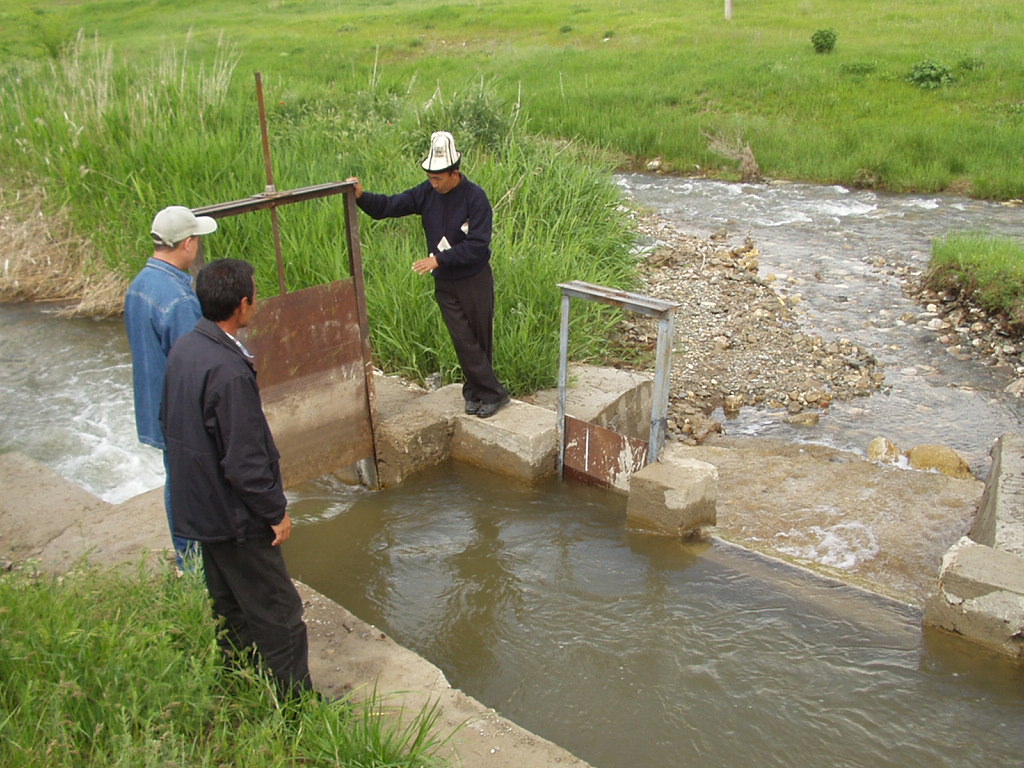
This blog builds on my comment on the important Water Alternatives forum topic “What is ‘equitable access to water’?” by Barbara Schreiner and Barbara van Koppen. Please read their excellent introduction and the insightful comments from others.
Of the many answers to the question ‘what is equitable access to water?’, I’d like to consider ‘processual pragmatism’. By this I mean taking a combined approach that is; 1) local, 2) participatory, and 3) incremental. With others, I have written about this before under the idea of ‘expedient allocation’, ‘the cathedral and the bazaar‘, plus it is embodied in my river basin game (aka the marbles game).
To introduce this, I first argue it could be problematic to rely on a universal (or global or theoretical) approach to ‘what is equity’ on the basis of formal indicators that invariably end up examining mathematical equivalences of water volumes allocated to and between sectors. (And which might miss out on the other properties of water such as affordability, location, timing, depth, kinetic energy and so on). For example, irrigation might consume 90% of water in a semi-arid river basin and that statistic looks highly inequitable. But imagine we get it down to 80% and allocate that 10% to other sectors in a timely, clean and affordable way. The remaining fraction 80% to irrigation still looks inequitable. In other words, we have to be careful of putting too much on percent fractions per se as a means to understand equity. But at the same time, we need to measure water allocations, withdrawals and consumption over time to know current patterns, and whether and how we are making progress. And widespread lack of knowledge about flows of water supply and demand is why we struggle to bear down on water equity.
We also know that there are considerable legacy effects that sustain either a status quo, or allow powerful sectors to keep growing their water withdrawals and consumption. I’ve written about this in a blog on my website on how irrigation colonises freshwater. I believe current mainstream water disciplines of law, engineering, social science and economics are not that good at holistic system interpretation. A bitty disciplinary approach is insufficient to address wider and cross-scalar system dynamics and outcomes. Thus, I think a straightforward engagement with legacy modalities of water law, water engineering and water economics seems to be ‘less solution’ and ‘more problem’ when redressing water equity. I also worry that relying on formal water solutions (e.g. satellite data and soil sensors) delivered in participatory ways to local farmers is not sufficient. Here, the power remains with the expert, their ‘water solution’ and their convenient diagnoses that everyone is not managing water correctly.
Moreover, this solution-, expert-driven approach manages to occlude a fundamental participatory principle (when defined by Robert Chamber’s idea of empowerment) – which is this: We need to facilitate robust local conversations between water users, asking ‘who among them are the experts in water management – and how and why do they know that?’ Once irrigators, including quieter voices, have carefully discussed and understood cross-scale system factors that shape their water management and sharing, experts can partner with them with new ideas and, if required, resources. Also external advisors might play a useful role in ratifying the new sharing arrangements, and agree these fall within their disciplinary understanding of water sharing to agree; ‘yes, this is more equitable than before’.
Summarising, to address equitable access and allocation, I believe we need a robust participatory dialogue process that seeks to incrementally adjust today’s allocations so that each year we gradually shift to new shares deemed to be more equitable than previous shares. This must be done locally and employ all voices in a catchment/aquifer, not just the expert or expert-parroting voices in the room. There are many local excellent water managers who, in their locality, are influential or marginalised, and who have insightful views on water sharing. We need to find them, give them a functioning local platform, and then have external experts support their views and attempts to change things, as well as helping to synthesise difficult-to-gather data on progress made. Measuring progress at different scales is also important in order to account for – and control – paradoxical reversals and rebounds.
I’m not saying anything new here about the importance of participation and dialogue, and I don’t discount the need for some serious reforms of water institutions, law, engineering, economics that shape water allocation. And I appreciate how we need to examine the political economies of food security, rural employment, the energy sector and so on also shape water demand and allocations.
But I am calling for a more expedient redistribution of water via through practical adjustments in water management. However my interpretation of the current state of water management is that influence and power is back with the formal/external expert and their solutions, albeit with a participatory add-on. (BTW, I think the cause of this is the funding- and donor-facing environment that researchers encounter, in order to showcase sciencey interventions that lead to intermediate impacts). But I don’t think this formal expertise is sufficient to readjust current water (in)equity. Catchment water sharing patterns are also a function of many cumulative local per-hectare or per-household effects, and at this scale at the bottom end, there are not enough external experts and sensors to go round.
 Bruce Lankford