
A cubic metre of water for mystery, learning & courage
Water is many things and takes many guises or forms1. Through these guises (see below) water surprises and tests us. It promotes learning, teaching and understanding, which are ingredients in peace-making. Its many forms and attributes may explain why we see water disjointedly or synergistically. Water is flow, depth, volume, timing, energy, food, physical sustenance, sanitation, mental recovery, poison, warmth and natural habitat. Water combines and divides. It is withdrawn, leaked, stored and discovered. It is found in health, agriculture, engineering, economics, politics and law – and it crosses disciplines and interlinks sectors. Water supports – and takes away – nature, lives and livelihoods. Furthermore, in our era of sharpening climate change, water’s guises will change, overlap or separate ever-more rapidly, bringing something unknown and unpredictable, something less mysterious and magical, to more fearful and frightening.
Water is highly perspectival. Depending on where, when, what and who you are, you can see water in very different ways. To show this, I’ve explored the many guises/forms of one cubic metre of water, which is 1000 litres and weighs 1000 kg:-
- Water for drinking: A cubic metre of clear potable water provides drinking water for one person for about 500 days.
- Water for cooking: A cubic metre of water will cook 4000 dishes each of 500 g of rice.
- Water is for people living in a house: A cubic metre of water will last about 6 – 7 days per person per household in the global North.
- Water is corporeal: Approximately 23 adult humans contain one cubic metre of water in their bodies.
- Water is depth that supports life: A cubic metre of water in a pond 2.5 m long and 2.5 m wide and 16 cm deep is shallow enough for frogspawn. Or a cubic metre provides an acceptable 5 cm of depth of water for growing rice over nearly 20 square metres.
- Water is depth that can drown: A cubic metre of water up-ended on a 65 cm x 65 cm footprint is 2.77 metres high, enough to drown a human adult.
- Water is for visual joy: A cubic metre of water delivered in one second by a power equivalent of ten Formula 1 car engines will create the world’s tallest (but brief) fountain of about 330 metres high.
- Water for spiritual health: The sound and sight of a cubic metre of water passing over rounded pebbles in a mountain stream 0.5 m long, 80 centimetres wide and 25 centimetres deep will slow your mind and inspirit your heart.
- Water is current: A kayaker hurtling down a mountain stream at 15 km/hour on a stream 0.5 m wide and 0.5 m deep is riding a ~cubic metre of water.
- Water for cleaning: A cubic metre of water will wash about five cars in an automatic wash or provides a human adult with approximately 10 baths.
- Water is for building: A cubic metre of water mixed with sand and cement in the correct ratio will produce enough mortar to build one-fifth of a typical UK 3-bedroom house. Water can also be used in a long clear plastic pipe to find levels and height-differences on a building site – as well as to make mugs of builders’ tea.
- Water for sanitation: A cubic metre of water is sufficient for ~150 x [uses of a low-flush toilet + hand washing].
- Water for play: A large inflatable paddling pool contains about a cubic metre of water. As my friend Ruth says “For splashing, jumping, throwing, swimming, playing, and care-free times.”
- Water flows with an energy that can kill: A cubic metre of water travelling 1 metre in 0.1 seconds has the same kinetic energy as a medium family car travelling at 35 km/hour.
- Water for industry: One cubic metre will build you one-fifth of an average car in a modern factory.
- Water poisons: A cubic metre of groundwater from an aquifer in Bangladesh can contain 1000 milligrams of arsenic, about the lethal dose for a human.
- Water is an ecological habitat: A cubic metre of water in a lake contains myriad creatures, plants, micro-organisms, nutrients, enzymes, molecules (e.g. oxygen), suspended solids, natural salts, and artificial chemicals and pollutants. These changing constituents and chemistries make for infinitely different water qualities and niches.
- Water in evapotranspiration provides food: A cubic metre of water will give 5 mm of transpiration for a day’s growth of a crop in an area of 200 square metres (about 14 x 14 metres wide and long).
- Water forms its own storage against the pull of gravity: A cubic metre of water is held in ~10 cubic metres of snow and in ~1.1 cubic metres of ice. The Spring melt of snow and ice are vital sources of water in catchments accustomed to and dependent upon those accumulations. Lower winter and long-term accumulations bring significant impacts downstream.
- Water is divided and apportioned: One cubic metre of water at the top end of a main canal in an irrigation system has to be divided about 6-8 times through subsidiary divisions to be accurately supplied to individual plant roots. (= One main canal of 1 cubic metre, two secondary canals each of 0.5 cubic metres, four tertiary canals with 0.25 cubic metres, eight farm canals of 0.125 cubic metres, and so on down to 128 individual plants each provided with 0.0078125 m3.) Getting this division locally equitable and ‘perfect’, especially in surface/canal irrigation systems is very difficult, and partly explains our preoccupation with irrigation efficiency2.
- Water for power: One cubic metre of water falling 1000 metres for one second through a hydropower plant will boil a kettle of water about three times over.
- Water for livestock and other animals. One cubic metre of water supplied to 4000 egg-laying hens will last about a day.
- Water holds heat: Because of the high thermal mass of water, the energy to raise the temperature of one cubic metre of water by 1 degree C is about 7-8 times the energy to boil a cup of 0.24-0.25 litres. A cubic metre of water may be too warm or too cold to allow fish to spawn.
- Water for transport: A cubic metre joins about 140 to 200 other cubic metres of water to operate a lock on the 200-year-old canal system of the United Kingdom.
- Water embedded in all goods provides for our lifestyles and diets: The virtual water consumption of a consumer in the global North is about 5,000 to 10,000 litres per day – depending on many factors! A cubic metre of water supports this person’s lifestyle for about 2-5 hours.
- Water connects communities over hundreds of kilometres: A cubic metre of water evaporated in an irrigation system is no longer available for a village downstream.
- Water is timing: A cubic metre of water delivered to your irrigated field in a queue of farmers comes with time and timing implications; you’ll be anxious if it arrives after your crops have wilted.
- Water is lost: When a cubic metre of water (promised to you as the whole 1000 litres) fails to water your farm plot as it did the previous time, you’ll know that, during conveyance & distribution, some water was lost to you. Prefiguration confounded…
- Water is form and movement: A cubic metre of water will present itself differently in a lake, a breaking wave, a sheet of ice, a bog, a mill-pond, a coastal tide, a muddy torrent, a puddle…
- Water is relative: A cubic metre of water during a two-day downpour of rain is not the same as a cubic metre of water gratefully received during a two-year drought. Likewise, a cubic metre of water at the top-end of an irrigation system may not be noticed; a cubic metre of water at the water-short tail-end of an irrigation system will make a difference to a farmer.
- Water is landscape and soil forming: A cubic metre of water acts differently within denuded or acidic soils on steep slopes compared to vegetated or pH-neutral soils on flat land. Water helps to form soil catenas and landscapes – which in turn influence how water infiltrates, runs and drains.
- Water is skyscape: One cubic metre of water joins approximately 1999 other cubic metres of water held up by a cumulus cloud with dimensions 1 km x 1 km x 1 km.
Water is stored, divided, rivalrous, cleaned, guided, reused, consumed, non-consumed, returned, joined, delayed, sluiced, lifted, dropped, public, private, warmed, cooled, oxygenated, degraded, and diluted by other water. Water puzzles us, it grows our humanity, and encourages our thinking. The commons of irrigation interested Nobel Laureate Elinor Ostrom throughout her career. Water’s coaching of society’s early civilisations drew the attention of Karl Wittfogel. Water joins nations in treaties and brings villagers together in small associations. Water teaches us and binds us together. Water is for bridging to another person’s perspectives.
You have probably spotted that my focus on a cubic metre of water misses out its relationships to, and within, wider systems of water, e.g. hydrological cycle, natural ecosystem, or the supply to, and within, a city or irrigation scheme. Furthermore, when I wrote a version of this blog for Tufts University in 2015 after attending a water and peace meeting there, I had not considered the alarming future of water brought by climate change. The frequent and damaging floods and droughts occurring around the world are frightening, to say the least. In this era of extremes and rapid change, water will switch between, and switch on and off, the above guises ever-more quickly, as a “procession of metamorphoses” to borrow a phrase from John Shotter.
Although a cubic metre of water asks for mystery*, mastery*, learning and accepting others’ perspectives, it and wider water systems are becoming increasingly unpredictable, capricious, impermanent and unknown, guises not well captured by the above list. Water’s absence, excess, in-betweenness and fluxes will test humans and nature. This enhanced fluidity between its guises means our cubic metre of water, and the systems the 1.0 m3 resides in, will demand from us tireless work, craft* and courage.
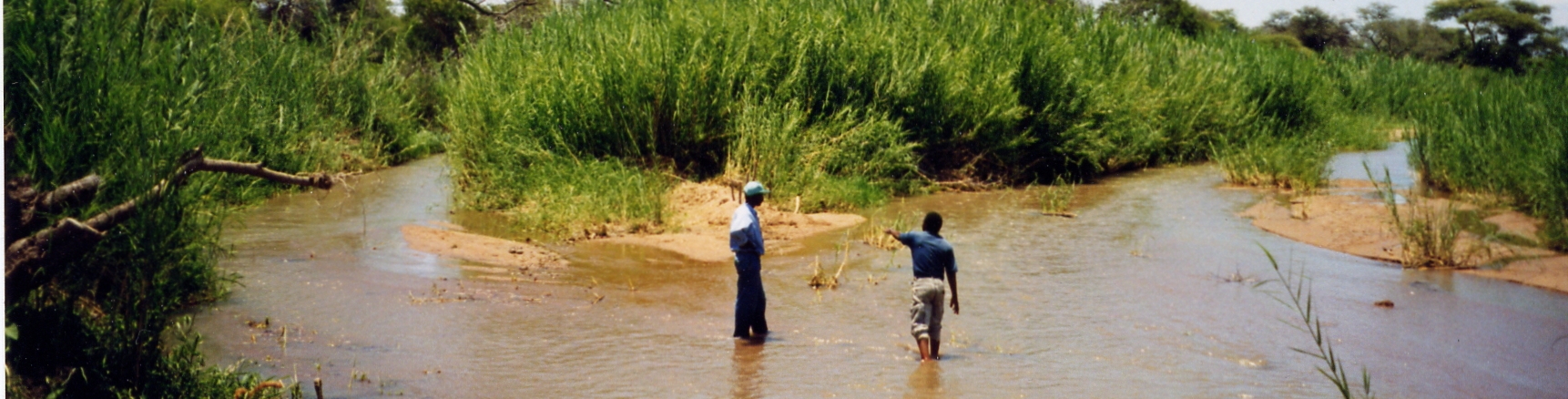
Photo above: Kyoga River in Tanzania, by B Lankford.
* Connecting between mystery, mastery and craft and between mystery, arts (as in craft or a trade), misterium and ministerium.
1. “like the many dynamic but stable “flowforms” that Riegner and Wilkes (1998) describe, which can be created within the fluid medium of water? “Water adopts a host of forms,” they say, (p.235).” Quoted from John Shotter.
2. Lankford, B. (2012). Fictions, fractions, factorials and fractures; on the framing of irrigation efficiency. Agricultural Water Management, 108, 27-38. https://doi.org/https://doi.org/10.1016/j.agwat.2011.08.010
How to cite: Lankford, B. A, 2024. One cubic metre of water for mystery, learning and courage. https://brucelankford.org.uk/2024/11/13/one-cubic-metre-of-water-for-mystery-learning-and-courage/
 Bruce Lankford